

Most sales teams struggle with outreach because they use marketing automation tools for cold sequences or risky LinkedIn bots that lead to account bans. Modern prospecting success isn't about finding a "one-size-fits-all" solution; it's about matching your technical infrastructure to your specific channel strategy. This guide breaks down the best outreach platforms by category and provides a roadmap for implementing a high-deliverability system that scales without compromising your reputation.
Key Takeaways (TL;DR)
The Strategy Shift: Modern outreach requires prioritizing deliverability infrastructure over simple automation. A basic tool configured with proper warm-up protocols and DNS authentication will consistently outperform an advanced platform that is set up incorrectly, as inbox providers now prioritize sender reputation over volume.
Email Infrastructure: For high-volume cold email, tools like Instantly and Smartlead are essential. They focus on domain rotation and automated warming to distribute sending volume across multiple accounts, ensuring your messages bypass increasingly strict machine-learning spam filters.
Multi-Channel Coordination: Platforms like Lemlist and LaGrowthMachine allow teams to synchronize touchpoints across email, LinkedIn, and phone. This creates a unified prospect experience and uses conditional logic to pause sequences once a lead engages, preventing redundant or unprofessional communication.
Linkedin: Tools like HeyReach and Expandi use cloud-based browsers and randomized activity patterns to mimic human behavior. This allows teams to automate networking and InMail outreach while mitigating the risk of account restrictions or permanent bans.
Implementation is Everything: Your choice of tool should be dictated by your primary channel and technical requirements. Once selected, the focus must remain on long-term technical health to ensure sustainable campaign success.
A Deep Dive into the Best Outreach Tools
The outreach tool landscape has evolved beyond simple email senders. What worked in 2020 – blasting cold emails from a single domain – now gets you blacklisted within days as inbox providers like Gmail and Outlook have tightened their machine-learning filters. Modern outreach platforms are built around deliverability infrastructure, prioritizing technical health over simple message automation.
You're choosing between fundamentally different architectures. Email infrastructure tools focus on warming domains, rotating sending addresses, and maintaining sender reputation through sophisticated DNS management. Multi-channel platforms coordinate sequences across email, LinkedIn, and phone, ensuring a unified prospect experience. LinkedIn-specific tools navigate the platform's increasingly strict automation policies using cloud-based browsers to mimic human behavior. Thus, there is no single best outreach program. The ideal choice depends entirely on your specific technical requirements, volume needs, and strategic goals.
This guide categorizes tools by strategic function, not arbitrary rankings. Each review specifies exactly what the platform does well, what technical capabilities it provides, and which use cases it serves. Match your technical requirements to the right tool architecture, then implement it correctly. That second part – the execution of warm-up protocols and authentication – matters more than most teams realize. If you are looking for the tactical roadmap to pair with this technical setup, see our comprehensive guide to B2B outbound lead generation strategies.
What is an Outreach Platform?
An outreach platform automates and scales personalized communication with prospects, customers, or partners across multiple channels. Unlike email marketing tools built for newsletters and promotional campaigns, outreach tools handle one-to-one or small-batch sequences that mimic manual prospecting.
The category evolved from the spam cannon era of 2015-2018, when tools simply sent high volumes of cold emails with minimal personalization. Deliverability wasn't a concern because inbox providers hadn't tightened their filters yet. That approach died when Gmail and Outlook implemented machine learning spam detection and stricter authentication requirements.
Modern outreach platforms are built around three core functions: deliverability management (warming, authentication, reputation monitoring), sequence automation (multi-step campaigns with conditional logic), and personalization at scale (dynamic variables, AI writing, data enrichment integration). The technical sophistication varies dramatically between tool categories.
Email Infrastructure Tools
These platforms prioritize inbox placement over feature breadth, serving as the technical foundation for high-volume sending. They include built-in email warm-up protocols that use AI-driven peer-to-peer networks to simulate human engagement, gradually increasing sending volume from new domains while rotating between multiple email accounts to distribute load and avoid triggering velocity-based spam filters.
Technical capabilities extend beyond simple sending to include automated DMARC, DKIM, and SPF authentication setup, real-time bounce management, and pre-send spam score testing that checks your copy against known blacklists. The best tools provide dedicated IP addresses to isolate your reputation, continuous domain health monitoring, and automatic throttling that pauses campaigns the moment deliverability metrics drop below safe thresholds.
You're paying for infrastructure and reputation management, not just a sequence builder. These tools maintain active relationships with major ISPs, monitor global blacklists in real-time, and update their underlying protocols as email authentication standards like BIMI evolve. They are non-negotiable for cold outreach programs sending 1,000+ emails daily where a single technical error can blacklist an entire company domain.
Multi-Channel Platforms
These tools coordinate sequences across email, LinkedIn, phone, and SMS in unified workflows, ensuring a persistent presence without overwhelming a single inbox. A prospect might receive a personalized cold email on day 1, a LinkedIn connection request on day 3, and a follow-up email on day 7 – all triggered automatically based on specific engagement triggers like link clicks or profile views.
The value lies in sophisticated orchestration rather than simple automation. Multi-channel platforms track interactions across every touchpoint, creating a "single source of truth" for prospect engagement. This allows the system to pause sequences instantly when a prospect engages on any channel, preventing embarrassing double-touches, and route hot leads to sales reps via Slack or CRM alerts in real-time. They integrate deeply with CRMs to sync contact data, log activity history, and update deal stages automatically, maintaining data integrity across the sales stack.
Technical requirements include robust API connections to LinkedIn, email providers, and VoIP phone systems. The best platforms offer native integrations rather than fragile Zapier workarounds, which reduces data latency and improves execution reliability. Furthermore, they provide unified attribution analytics, allowing teams to identify which specific channel combinations and touchpoint cadences drive the highest conversion rates for different buyer personas. If your multi-channel strategy relies heavily on the phone, check out our comparison of the best AI cold calling software tools to automate the dialer experience.
LinkedIn Automation Tools
These platforms handle connection requests, InMail messages, and profile viewing at scale while navigating the platform's increasingly sophisticated detection algorithms. By utilizing cloud-based browsers, dedicated residential proxies, and randomized activity patterns, these tools mimic human behavior to avoid account restrictions. They are essential for teams whose primary lead source is social selling rather than traditional email.
Technical safety is the primary differentiator in this category. Advanced tools use dedicated IP addresses and "warm-up" protocols that gradually increase social activity to stay within LinkedIn's weekly invitation limits. They also incorporate randomized delays between actions and "human-like" scrolling patterns to bypass automated bot detection systems. This infrastructure allows sales teams to scale their social prospecting without risking permanent profile bans or "LinkedIn jail" restrictions.
Beyond simple messaging, these specialized platforms solve engagement problems that general-purpose email tools handle poorly. They provide unified social inboxes to manage conversations across multiple accounts, smart sequences that adapt based on profile data, and integration with CRM systems to log social interactions. You choose these tools based on account safety and social engagement patterns rather than just feature checklists, ensuring a reliable foundation for high-volume LinkedIn prospecting.
Why Sales Teams Need the Right Outreach Tool
Deliverability determines everything. You can have perfect messaging, ideal targeting, and compelling offers, but if your emails land in spam folders or "Promotions" tabs, your outreach program fails before it begins. The right tool provides the underlying technical infrastructure that most sales teams lack the engineering resources to build and maintain in-house.
Manual prospecting simply doesn't scale without sacrificing quality or sanity. You need automation to reach the volume required for predictable pipeline generation and statistical significance in your testing. However, automation without proper technical guardrails is a liability; it leads to blacklisted domains, permanent LinkedIn account bans, and a damaged brand reputation caused by poorly timed or redundant sequences.
The gap between owning an outreach tool and operating a functional outreach system is where most teams fail. Tools provide the raw capabilities, but systems provide the repeatable results. The right platform makes correct implementation possible, but the strategic execution remains the differentiator between noise and revenue.
How to Choose the Right Outreach Platform for Your Needs
Selecting the right platform depends on matching your technical requirements to your primary sales channel. A tool with excessive features often performs worse than a focused platform that excels at your specific use case, such as high-volume cold email or integrated LinkedIn prospecting. Use the following dimensions to evaluate your options:
Primary Channel Alignment: Your strategy dictates the tool category. B2B cold email requires heavy infrastructure for domain warming and rotation (e.g., Instantly), whereas social-first prospecting requires cloud-based LinkedIn automation to protect account safety. If you need to coordinate touches across both, a multi-channel platform like Lemlist is essential to prevent redundant messaging.
Technical Infrastructure & Deliverability: For email-heavy teams, the platform must automate DMARC, DKIM, and SPF setup while providing real-time reputation monitoring. Look for tools that offer automated "warm-up" protocols and the ability to rotate between multiple sending domains to ensure your messages bypass machine-learning spam filters.
CRM & Data Integration: Native integration with Salesforce, HubSpot, or Pipedrive is non-negotiable for maintaining a single source of truth. The tool should automatically sync contact data, log activity history, and update deal stages. Robust API access is also critical if you plan to trigger sequences based on external intent signals or website visits.
Flexibility vs. Ease of Use: Power-user platforms offer deep customization through custom fields, webhooks, and complex conditional logic but require significant technical expertise to configure. Conversely, template-based tools allow for rapid deployment but may become limiting as your outreach workflows grow in complexity.
Team Collaboration & Visibility: If multiple reps are active, you need shared inboxes, centralized template libraries, and campaign approval workflows. This ensures brand consistency and prevents "double-touching" the same prospect across different team member accounts.
Pricing & Scalability: Evaluate whether per-user or per-contact pricing fits your growth model. Ensure that critical deliverability features – like dedicated IPs and advanced analytics – are not locked behind enterprise tiers that exceed your budget as you scale from 100 to 1,000+ daily sends.
Overview of Top Outreach Sales Tools
Tool Name | Key Services/Features | Target Audience/Best For |
Instantly | Email warm-up, unlimited accounts, deliverability optimization, campaign analytics | B2B sales teams running high-volume cold email campaigns |
Smartlead | AI email writing, multi-inbox rotation, spam testing, CRM integration | Agencies and sales teams prioritizing inbox placement |
Lemlist | Multi-channel sequences (email + LinkedIn), personalized images/videos, A/B testing | Sales teams coordinating outreach across multiple touchpoints |
LaGrowthMachine | Email + LinkedIn + X (Twitter) automation, lead enrichment, unified analytics | Growth teams running integrated multi-channel campaigns |
HeyReach | LinkedIn automation, cloud-based (no account risk), team collaboration | B2B companies focused on LinkedIn prospecting |
Expandi | LinkedIn outreach, smart sequences, CRM sync, safety features | Sales professionals using LinkedIn as primary channel |
Instantly
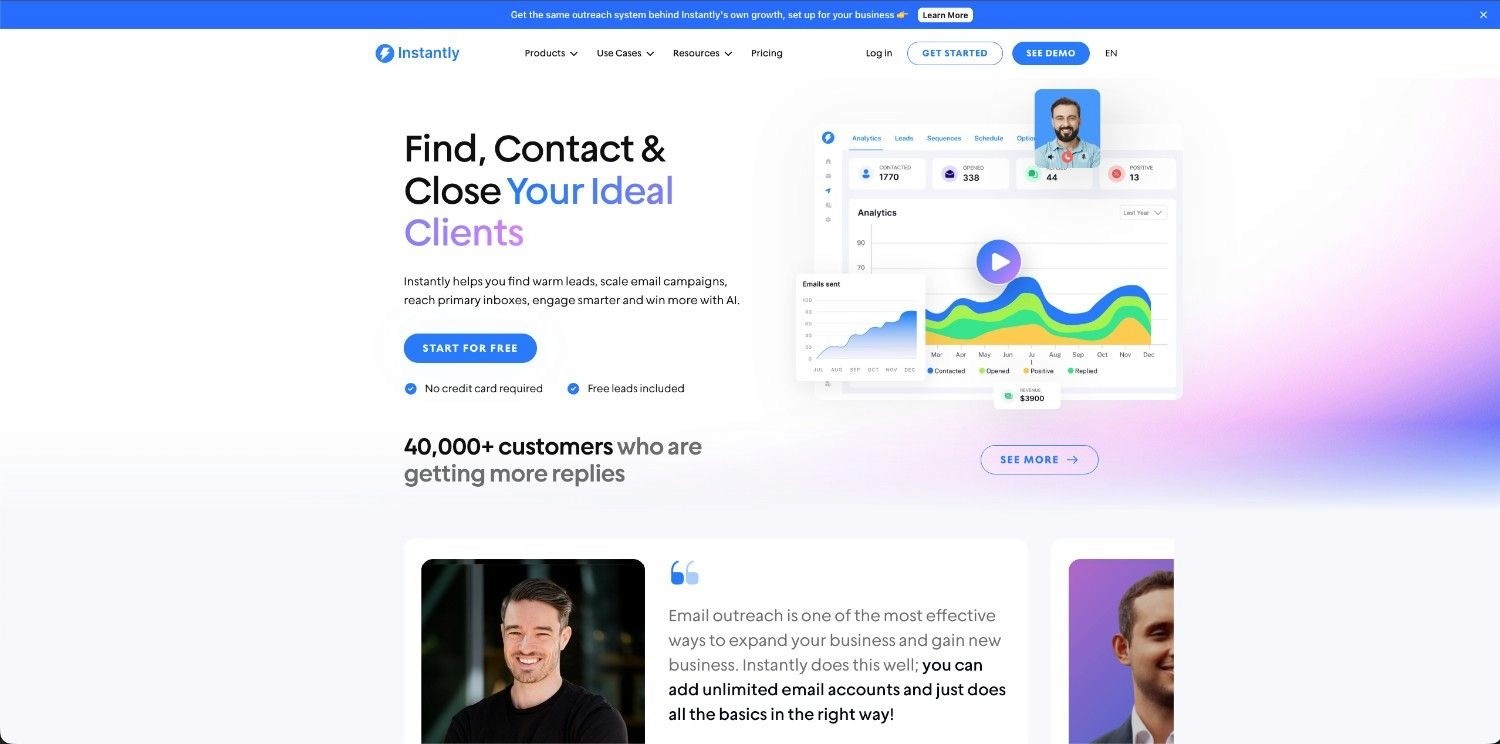
Best For: B2B sales teams sending 1,000+ cold emails daily who need bulletproof deliverability
Key Services: Unlimited email account rotation, built-in warm-up for all accounts, real-time deliverability monitoring, campaign analytics with reply categorization
Unique Strength: Unlimited email accounts at flat monthly pricing – you can rotate between dozens of sending addresses to distribute volume and protect domain reputation
Instantly built its platform specifically for cold email at scale. The warm-up feature gradually increases sending volume across all connected accounts simultaneously, mixing automated engagement with real sends to establish sender reputation. You're not paying per account, which makes aggressive domain rotation economically viable.
The deliverability dashboard shows inbox placement rates across Gmail, Outlook, and other providers in real-time. When metrics drop, the platform automatically throttles sends and alerts you to potential issues. Integration with major CRMs is straightforward, and the campaign builder supports complex sequences with conditional logic based on prospect engagement.
Smartlead
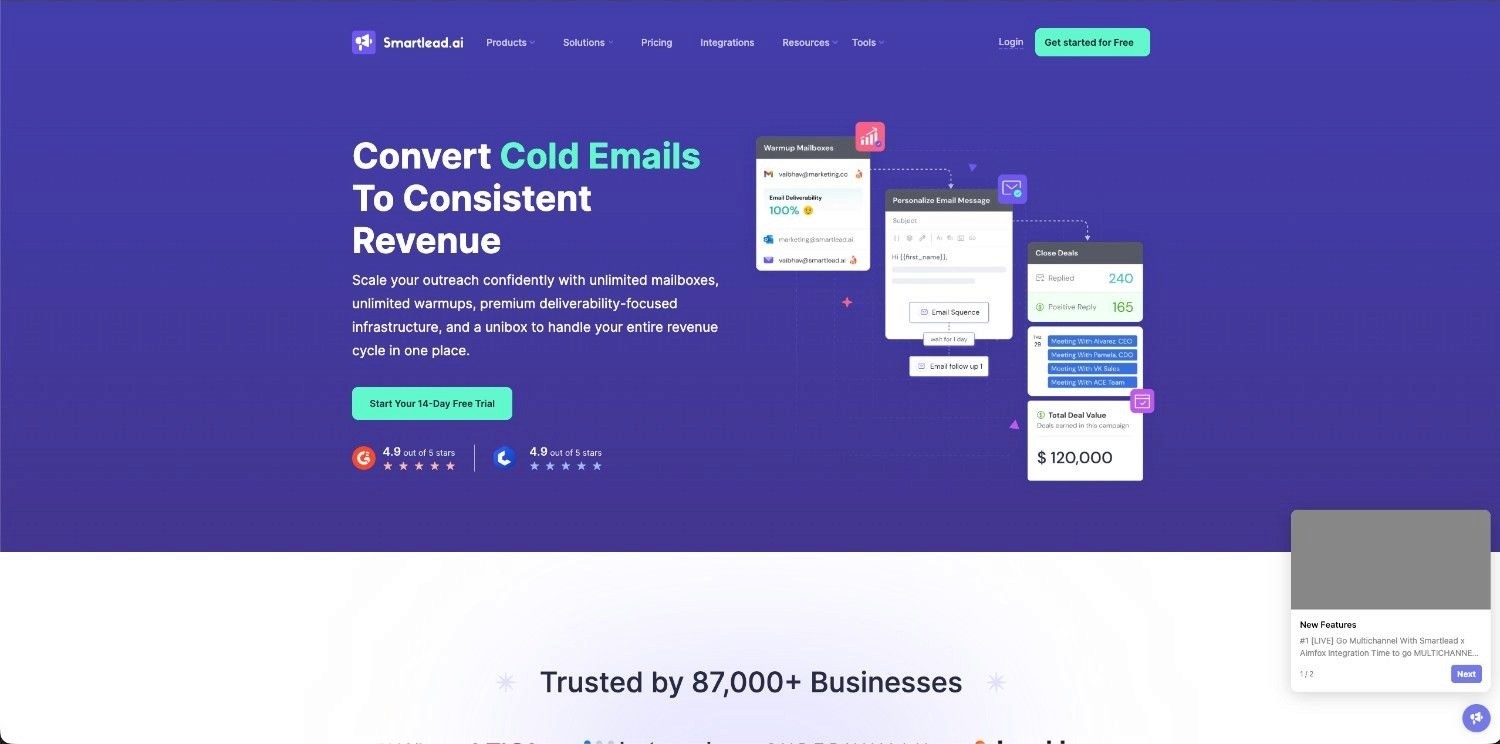
Best For: Teams that need AI-powered personalization combined with enterprise-grade deliverability infrastructure
Key Services: GPT-4 email writing, multi-inbox management, spam score testing, dedicated IP addresses, advanced analytics
Unique Strength: AI personalization that analyzes prospect data from enrichment APIs and generates contextually relevant email content at scale
Smartlead combines deliverability infrastructure with AI writing capabilities that go beyond simple variable replacement. The platform pulls firmographic and technographic data, then generates opening lines or full email bodies based on company size, industry, tech stack, and recent news. Quality varies but improves with prompt refinement.
The technical infrastructure includes DMARC/DKIM/SPF setup assistance, automatic bounce management, and spam testing before sends. You can preview how emails render across different clients and test subject lines against spam filters. The multi-inbox rotation distributes sends across accounts automatically based on volume limits and engagement rates.
Lemlist
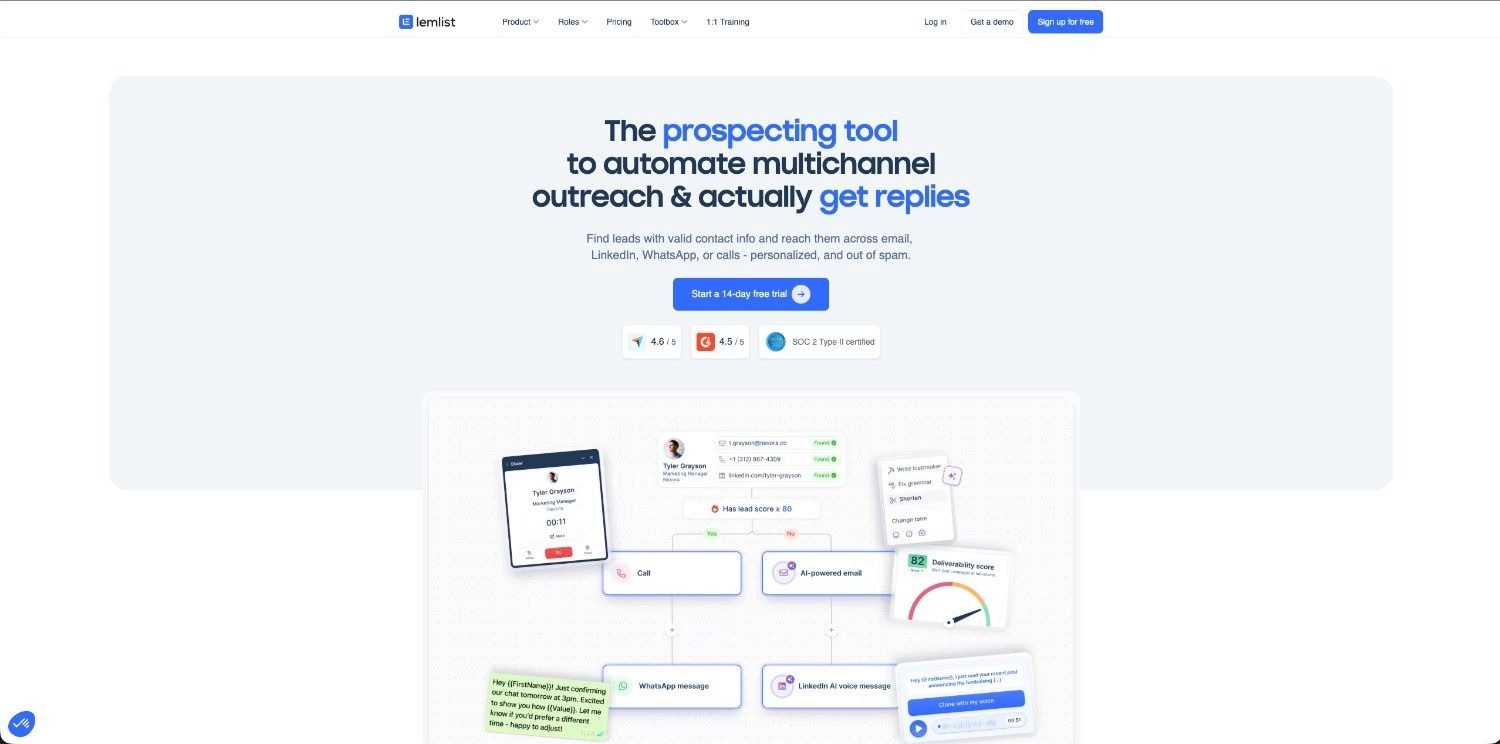
Best For: Sales teams coordinating email and LinkedIn outreach in unified sequences
Key Services: Multi-channel automation (email + LinkedIn), personalized images and videos, A/B testing, landing page builder, CRM integration
Unique Strength: Dynamic image and video personalization that inserts prospect names, company logos, or custom messages into visual content
Lemlist pioneered personalized images in cold outreach – screenshots with prospect names, custom graphics with company logos, personalized video thumbnails. The visual differentiation improves open and response rates, though the novelty has worn off as more teams adopt the tactic.
The multi-channel sequencing coordinates email and LinkedIn touches with conditional logic. If a prospect accepts your LinkedIn connection, the platform pauses email sends and triggers LinkedIn messages. If they don't respond to email within 5 days, it sends a connection request. The orchestration reduces duplicate touches and improves coordination.
LaGrowthMachine
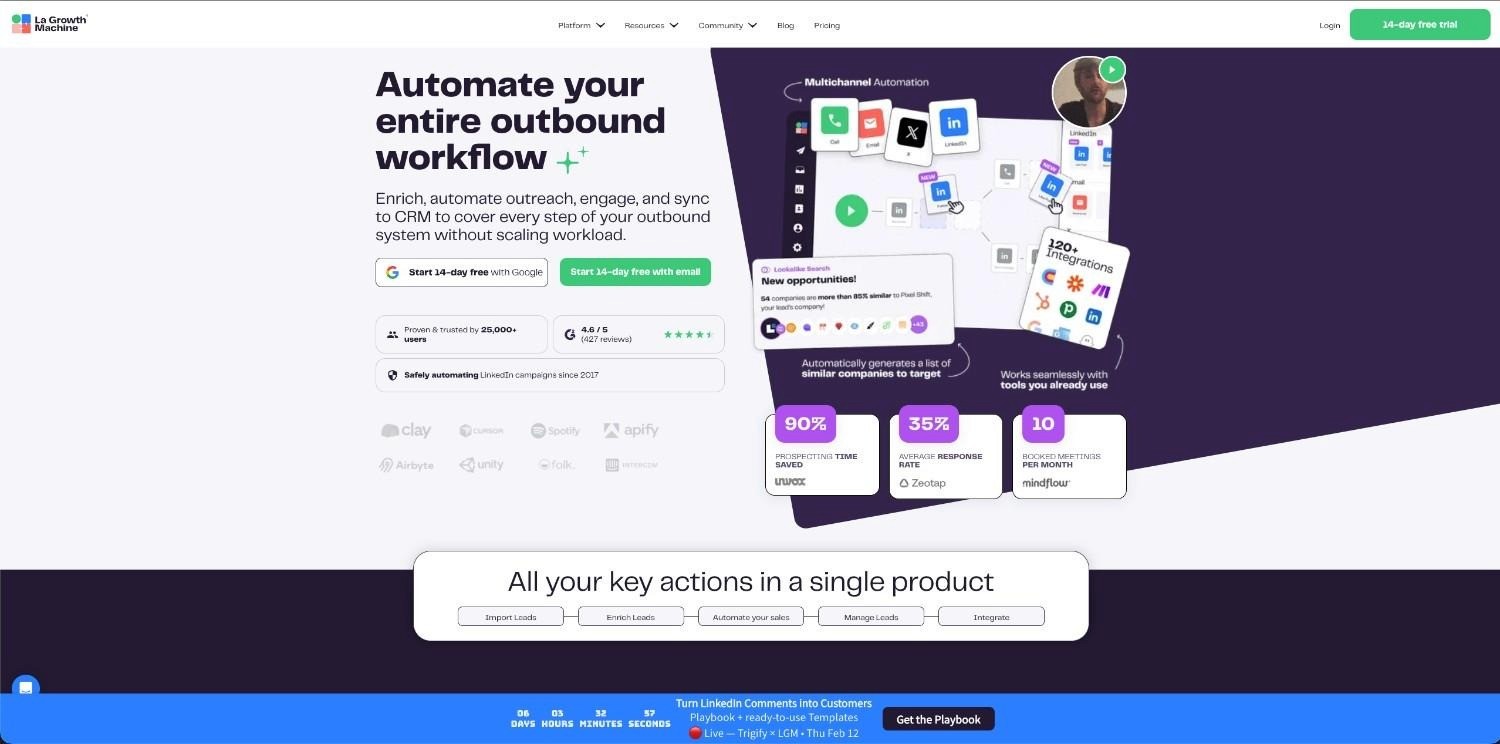
Best For: Growth teams running integrated campaigns across email, LinkedIn, and X (Twitter) with built-in lead enrichment
Key Services: Multi-channel automation, lead database enrichment, unified inbox, campaign analytics, native CRM integrations
Unique Strength: Built-in data enrichment that pulls contact information and firmographic data without requiring separate enrichment tools
LaGrowthMachine includes lead enrichment as a core feature rather than requiring integration with external data providers. Upload a list of companies or LinkedIn profiles, and the platform finds email addresses, phone numbers, and company data automatically. Accuracy varies by region and industry but eliminates the need for separate Clay or Apollo subscriptions for basic enrichment.
The multi-channel sequences support email, LinkedIn connection requests, LinkedIn messages, and Twitter follows/DMs. You're building unified campaigns that adapt based on prospect engagement across all channels. The analytics dashboard shows which channel combinations drive the highest response rates for different segments.
HeyReach
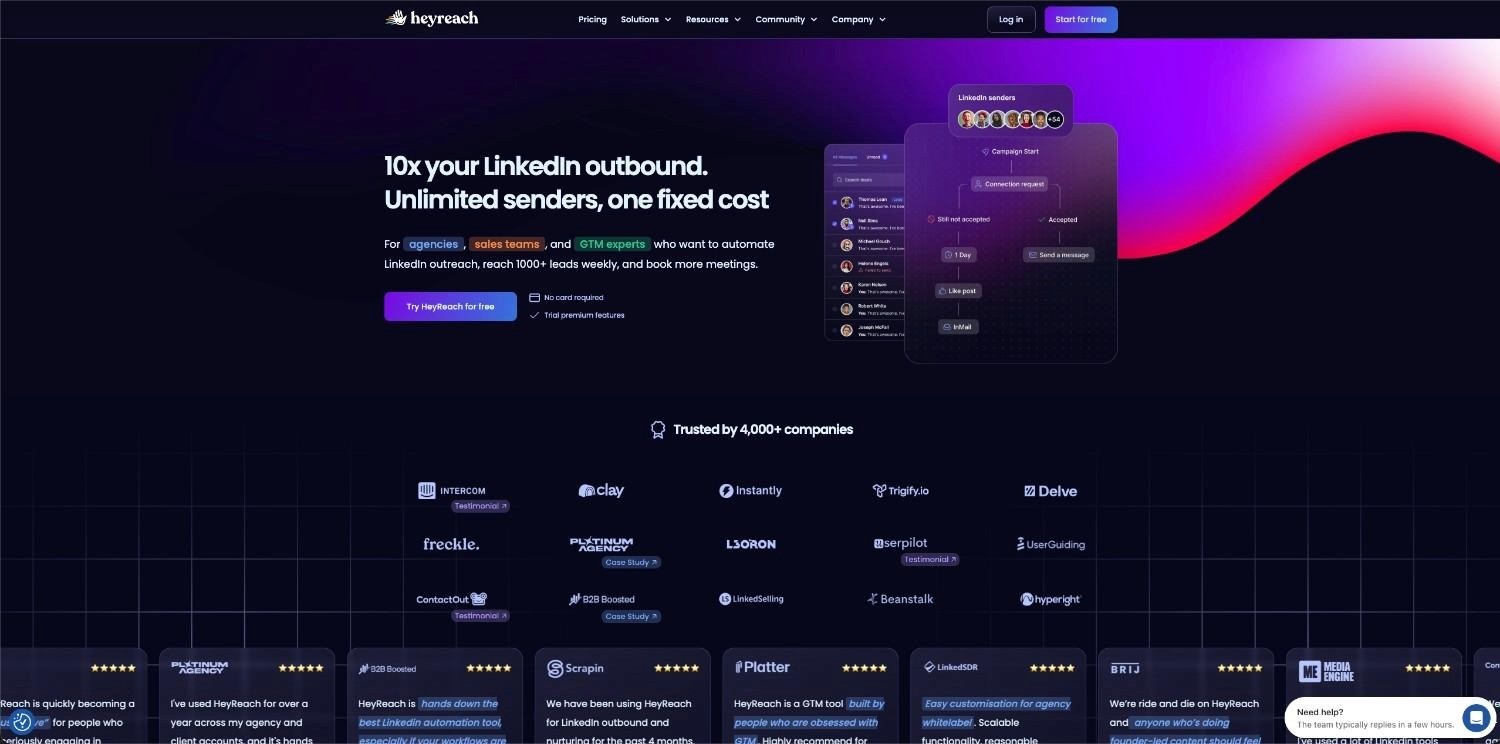
Best For: B2B companies running LinkedIn prospecting at scale without risking account restrictions
Key Services: Cloud-based LinkedIn automation, team collaboration, inbox management, campaign analytics, safety features
Unique Strength: Cloud-based operation that doesn't require browser extensions or desktop apps, reducing detection risk
HeyReach runs entirely in the cloud using dedicated LinkedIn sessions that mimic human behavior patterns. You're not installing browser extensions or running desktop apps that LinkedIn can detect easily. The platform manages rate limits automatically, randomizes action timing, and pauses activity when LinkedIn's algorithms show increased scrutiny.
Team collaboration features let multiple users manage campaigns, share templates, and track performance from a unified dashboard. The inbox aggregates all LinkedIn conversations, making it easier to manage responses at scale. Integration with CRMs syncs contact data and logs activities automatically.
Expandi
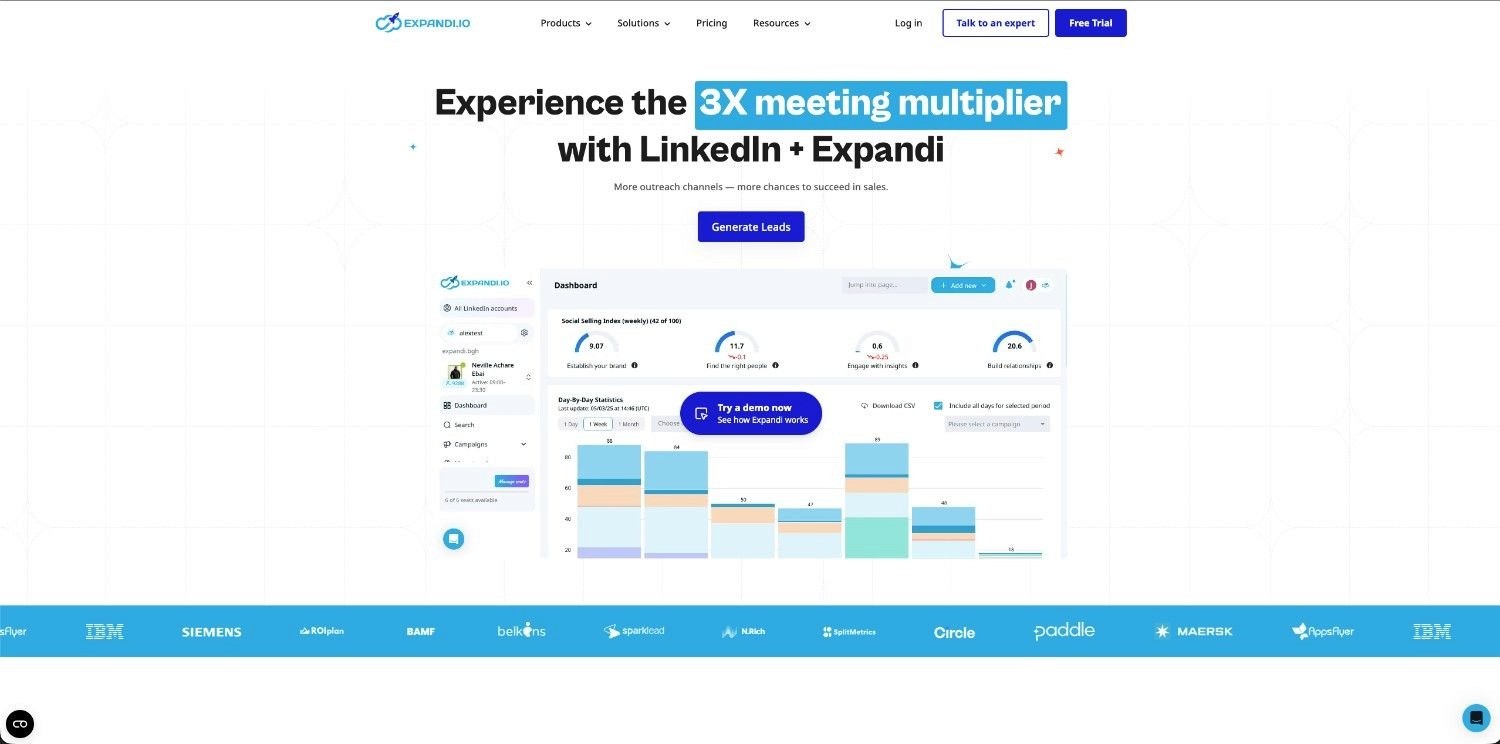
Best For: Sales professionals using LinkedIn as their primary outreach channel who need advanced personalization
Key Services: LinkedIn automation, smart sequences, GIF personalization, CRM integration, dedicated IP addresses
Unique Strength: Smart sequences that adapt based on prospect profile data (industry, job title, company size) without manual segmentation
Expandi's smart sequences use conditional logic based on LinkedIn profile data. If a prospect works at a company with 50-200 employees, they receive one message variant. If they're at a 1,000+ person company, they get different messaging. The platform pulls this data automatically from LinkedIn profiles and adjusts sequences accordingly.
The safety features include dedicated IP addresses for each user, randomized action delays, and automatic daily limits that adjust based on account age and activity history. Newer LinkedIn accounts get lower limits that gradually increase over weeks. The platform also detects when LinkedIn implements temporary restrictions and pauses activity automatically.
The Future of Outreach
The future of outreach lies in the convergence of technical flexibility and user accessibility. Currently, the market is bifurcated: platforms like Clay offer immense power and customization (see our guide on how to build Clay automations) but require a steep learning curve, while traditional sequencing tools remain user-friendly but functionally rigid. The dominant platform of the next decade will be the one that bridges this gap, providing a seamless interface for non-technical teams.
This evolution will be driven by AI-orchestrated workflows that handle the heavy lifting of data enrichment and technical configuration behind the scenes. Instead of manually mapping APIs, users will describe their ideal prospect journey and let the platform assemble the necessary infrastructure. This shift moves the focus from managing software to refining strategy and creative messaging.
As these architectures merge, the distinction between "simple" and "powerful" will disappear, making sophisticated, highly personalized outreach the standard rather than the exception. Organizations will no longer have to choose between deliverability and ease of use. The result is a more efficient ecosystem where technical barriers no longer limit a sales team's ability to connect with their market.
Ready to Start Your Outreach?
You now understand the technical infrastructure and strategic frameworks required for modern outreach. The next step is implementation. Start by selecting a tool that aligns with your primary channel – whether that’s high-volume cold email or social-first LinkedIn prospecting. Configure your authentication, start your warm-up protocols, and launch your first sequence.
Most sales teams see a significant lift in deliverability and response rates within the first 30 days of moving to a dedicated outreach platform. Quick wins in inbox placement build the foundation for a predictable revenue pipeline.
If you need guidance on GTM engineering, deliverability audits, or RevOps infrastructure, feel free to reach out and schedule a meeting here.
Frequently Asked Questions
What is an outreach tool?
An outreach tool is a specialized platform designed to automate and scale personalized communication with prospects across channels like email, LinkedIn, and phone. Unlike marketing automation tools built for mass newsletters, these platforms focus on one-to-one sequences that mimic manual human activity. They provide the technical infrastructure for deliverability to ensure messages land in the primary inbox rather than spam folders, ultimately driving higher engagement and response rates through persistent, multi-step follow-ups.
Why is deliverability so important in outreach?
The reason deliverability is so important in outreach is that it serves as the gatekeeper for your entire sales process; if your message never reaches the prospect's primary inbox, your copy and offer are irrelevant. Without a robust technical infrastructure inbox providers will flag your sequences as spam or relegate them to the promotions tab. Modern outreach tools cover these technical guardrails to protect your sender reputation, ensuring that high-volume prospecting doesn't lead to permanent domain blacklisting.
What is the difference between email marketing and cold outreach tools?
The primary difference between email marketing and cold outreach tools lies in their technical architecture and intent. Email marketing platforms (like Mailchimp) are designed for "one-to-many" communication with opted-in subscribers, utilizing shared IP addresses and HTML-heavy templates that are easily flagged as spam if used for cold lists. In contrast, outreach tools are engineered for "one-to-one" prospecting, utilizing plain-text formatting, domain rotation, and automated warm-up protocols to mimic human behavior and ensure high deliverability for cold sequences.
Should I use a multi-channel or a single-channel tool?
Deciding whether to use a multi-channel or a single-channel tool depends entirely on your specific sales strategy and where your prospects are most active. If your target audience engages across both email and social media, a multi-channel platform like Lemlist or LaGrowthMachine is superior for coordinating touches and preventing redundant messaging. However, if your strategy relies exclusively on high-volume cold email, a specialized infrastructure tool like Instantly often provides more robust deliverability features and domain rotation capabilities at a lower price point.
How is AI changing outreach tools?
The way AI is changing outreach tools is by shifting the focus from simple template variables to sophisticated, dynamic personalization at scale. Modern platforms leverage generative AI to analyze a prospect's recent LinkedIn activity, quarterly earnings reports, or website content to write custom opening lines that feel truly manual. Beyond copywriting, AI now powers predictive deliverability by optimizing send times based on recipient behavior and automating lead research, which significantly increases response rates while reducing the manual workload for sales teams.