

Best Google Ads Agencies in 2026: Reviewed by B2B Growth Experts
Key Takeaways (TL;DR)
If you are a founder or revenue leader without the time to read the full breakdown, here is what you need to know:
What Google Ads agencies actually do?: The best ones do not just set up campaigns and report on click-through rates. They connect Google Ads to the pipeline by reverse engineering how your target buyers think, identifying what breaks the pattern when they see an ad, and building campaigns that capture attention and drive revenue rather than just traffic.
Why do most B2B Google Ads programmes underperform?: Most teams run generic search campaigns with broad keyword targeting and measure success by cost-per-click. The agencies producing real pipeline results in 2026 start with the buyer's psychology: what are they searching for, what are they trying to solve, and what message will stop them from scrolling past.
Selection principle: Match the agency to your objective. If your problem is that clicks are not converting to pipeline, the issue is likely positioning and message, not budget or bidding. If you have solid creative and positioning but are missing leads, the issue is more likely targeting and infrastructure. Those are different problems that require different partners.
Intelligence matters as much as execution: The best Google Ads agencies in 2026 use ad intelligence data to understand competitor volume and strategy before building campaigns. Knowing how much your target accounts are advertising, on which channels, and with what frequency gives you a significant advantage in positioning your own campaigns.
Speed of response is an underrated factor: Getting a reply to a prospect who clicked your Google Ad within minutes is one of the highest-leverage improvements most B2B companies can make. The agencies that understand the full pipeline mechanics – not just the ad side – build systems that ensure no inbound lead from paid search goes unanswered.
Top Google Ads Agencies in 2026 at a Glance
Agency | Primary Focus | Best For |
Growthspree | Full-funnel B2B Google Ads and demand generation | B2B SaaS and mid-market companies running pipeline-accountable Google Ads programmes |
The Pipeline Inc. | Pattern-breaking Google Ads strategy and positioning | B2B companies that need their Google Ads to break through competitive noise and drive pipeline |
SaaS Hero | Google Ads management for B2B SaaS companies | SaaS companies needing specialist Google Ads management with deep vertical expertise |
MasterInbox | Multi-inbox reply management with Google Ads integration | B2B companies that want to reply instantly to leads generated through Google Ads |
Adyntel | Ad intelligence API (for Google, LinkedIn, and Meta) | Sales, enrichment, and CRM teams that need competitor and account-level ad volume data across Google, LinkedIn, and Meta |
What Is a Google Ads Agency?
A Google Ads agency is a specialist firm that plans, builds, and manages paid search and display advertising campaigns on Google for B2B companies. Their scope typically covers keyword strategy, campaign architecture, ad copy and creative development, bidding and budget management, landing page alignment, conversion tracking, and performance reporting.
The best Google Ads agencies go well beyond campaign setup and keyword optimisation.
They connect Google Ads to commercial outcomes: which searches indicate active buying intent, which messages convert searchers into pipeline, and how to structure campaigns so that spend concentrates on the queries most likely to produce qualified opportunities rather than traffic volume.
For B2B SaaS companies in particular, Google Ads occupies a specific role in the go-to-market motion. It captures demand that already exists – buyers actively searching for the problem your product solves, or searching for your category, your competitors, or their own pain points. Done well, it is one of the highest-intent acquisition channels available.
Done poorly, it burns budget on traffic that never converts because the targeting is broad, the message is generic, or the pipeline mechanics after the click are not built to handle inbound at speed.
According to Google, search ads can increase brand awareness by up to 80%, and for B2B categories with long sales cycles, that awareness compounds over time as buyers encounter the same brand across multiple searches before making a decision.
The agencies that understand this run Google Ads not as a standalone channel but as part of a coordinated demand generation motion.
How the Google Ads Market Has Changed in 2026?
1. Pattern interruption has replaced keyword optimisation as the primary skill
Three years ago, the central skill in Google Ads management was keyword research and bid optimisation. That still matters, but it is table stakes.
The agencies producing outsized results in 2026 understand buyer psychology first: what is the searcher's mental state when they type that query, what are they hoping to find, and what ad headline would make them stop and read rather than scroll past.
One of my agency owner friends calls this reverse engineering how people think, and it is the difference between an ad that generates clicks and one that generates pipeline.
2. Positioning work now happens before campaign build
The best top Google Ads agencies in 2026 do not start with keywords.
They start with the company's unique positioning: what makes this product genuinely different, what pain point is most acute for the target buyer right now, and how to translate that into a message that stands out.
That positioning work informs keyword selection, ad copy, landing page structure, and bidding strategy in sequence.
3. Ad intelligence has become a competitive advantage
Understanding what competitors are advertising – their volume, their formats, their messaging – before building your own campaigns gives agencies a meaningful head start.
Tools like Adyntel, which aggregate ad volume and creative data across Google, LinkedIn, and Meta into a single API, have made this kind of competitive intelligence accessible without manual research across separate platforms.
Agencies that use this data make better targeting and positioning decisions from day one.
4. Response speed after the click is now part of the agency remit
Most Google Ads agencies optimize for the click. The best ones in 2026 understand that what happens after the click is equally important: how fast does someone respond to an inbound lead, through which channel, and with what message.
Tools like MasterInbox – which consolidate replies from Google Ads, LinkedIn, email, and other inboxes into a single interface, address one of the highest-leverage improvements most B2B companies can make to their paid search ROI.
Agencies that build this layer give clients a materially better conversion rate from click to pipeline.
Best Google Ads Agencies in 2026: Full Reviews
1. Growthspree
Best For: B2B SaaS and mid-market companies that need Google Ads integrated into a broader demand generation or ABM programme, with full ownership from strategy through to pipeline reporting.
Overview
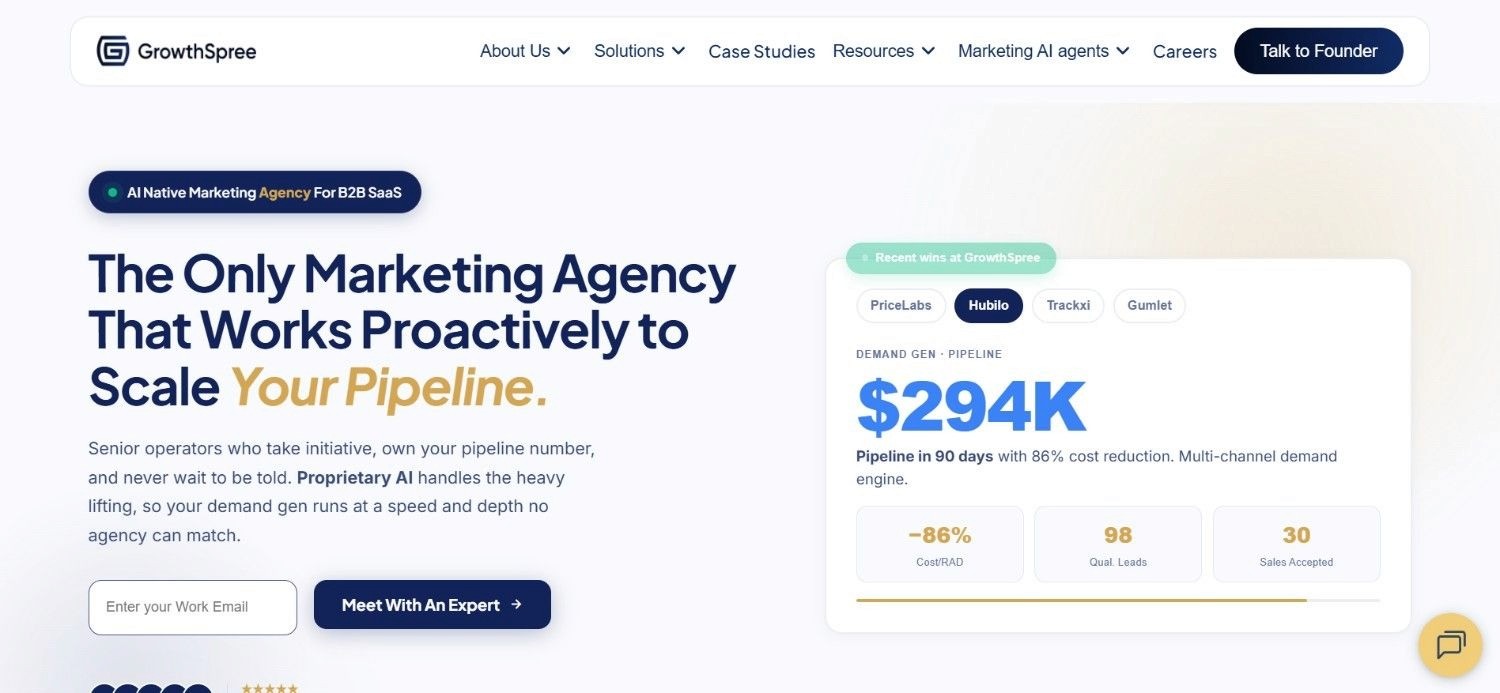
Growthspree is a demand generation and B2B advertising agency that treats Google Ads as part of a coordinated go-to-market motion rather than a standalone paid search channel. Where most agencies optimise campaigns for clicks and cost-per-lead, Growthspree connects Google Ads activity to pipeline outcomes: which queries are producing qualified opportunities, how ad exposure influences conversion rates at later stages, and how to build a campaign architecture that concentrates spend on the searches most likely to generate revenue.
The agency works with B2B SaaS companies and mid-market teams that need Google Ads to produce pipeline, not just traffic. Their approach starts with positioning and buyer psychology before moving into keyword strategy, ad copy, and campaign architecture.
For companies running ABM programmes, Growthspree builds Google Ads as the inbound capture layer that works alongside outbound and LinkedIn advertising to cover all points where a target buyer might encounter the brand.
Core Services
Google Ads strategy and campaign management covering keyword research, campaign architecture, ad copy development, bidding strategy, and ongoing optimisation tied to pipeline contribution targets rather than media metrics
Positioning and message development for paid search, identifying what the target buyer is actually searching for and what message will convert that intent into a click and then a qualified conversation
Pipeline attribution and performance reporting connecting Google Ads activity to CRM data, giving the client team visibility into which campaigns and keywords are producing qualified pipeline rather than just measuring cost-per-click
Pros
Full-funnel approach connects Google Ads to pipeline and revenue rather than traffic and click metrics
Positioning-first methodology ensures ad copy and landing pages are built around genuine buyer intent rather than keyword volume
Integration with broader demand generation programmes means Google Ads works alongside outbound and LinkedIn rather than running in isolation
Strong fit for B2B SaaS companies that want one agency owning search strategy, execution, and attribution together
Cons
Custom pricing requires a direct conversation before evaluating budget fit
Why It Stands Out
Growthspree stands out among the best Google Ads agencies in 2026 for treating paid search as a pipeline programme rather than a media buy. Most agencies optimize for cost-per-click.
Growthspree optimises for qualified pipeline contribution, which means building the attribution layer, aligning ad messaging with actual buyer psychology, and reporting on what moved opportunities forward rather than what generated form fills.
For B2B companies that want Google Ads to produce revenue rather than traffic, Growthspree is the strongest full-stack choice on this list.
2. The Pipeline Inc.
Best For: B2B companies that need their Google Ads to break through competitive noise, built around a deep understanding of buyer psychology and what message will interrupt the pattern and drive pipeline.
Overview
The Pipeline Inc. is a B2B growth agency focused on building Google Ads programmes that generate pipeline by reverse engineering how target buyers think.
Rather than starting with keyword lists and bid strategies, The Pipeline Inc. starts with a fundamental question: when someone sees this ad, what needs to happen in their brain for them to stop, read it, and take action?
That psychological starting point shapes everything downstream: the keyword strategy, the ad copy, the landing page structure, and the offer.
The Pipeline Inc. works from the company's unique positioning outward, identifying what genuinely differentiates the product, what pain point is most acute for the buyer at the moment of search, and how to translate that into a message that breaks the pattern in a search results page where most B2B ads say the same thing.
Their approach also connects inbound from Google Ads to outbound, using what they learn from paid search performance to inform and improve broader go-to-market sequencing.
Core Services
Buyer psychology and positioning analysis identifying what the target buyer is actually thinking when they search, what patterns the existing ads in the market are running, and what message angle will break through and capture attention
Google Ads campaign strategy and execution built from that positioning foundation, covering keyword architecture, ad copy development, bidding, and landing page alignment
Inbound-to-outbound integration connecting what is learned from Google Ads performance back into broader go-to-market strategy, using paid search data to inform outbound messaging and sequencing
Pros
Positioning-first methodology produces ad copy and landing pages that reflect genuine buyer intent rather than keyword matching
Deep focus on pattern interruption and buyer psychology produces higher-quality traffic than volume-focused campaign management
Integration between Google Ads insights and outbound strategy creates a feedback loop that improves the whole go-to-market motion over time
Strong fit for B2B companies in competitive categories where standing out in search results is a real challenge
Cons
Psychology-first, positioning-led approach requires more discovery and strategy work upfront before campaigns launch compared to standard campaign management engagements
Less focused on broad-scale paid search management across multiple product lines or very large keyword sets; strongest in focused, positioning-driven campaign builds
Boutique positioning means capacity may be more limited for very large or multi-market programmes
Why It Stands Out
The Pipeline Inc. stands out for Vlad's focus on the buyer's psychological state as the starting point for Google Ads strategy. Most Google Ads agencies optimize from the keyword level up.
The Pipeline Inc. works from the buyer's intent and psychology down, which produces campaigns that convert at higher rates because the message matches not just what the buyer searched for but what they were actually hoping to find.
For B2B companies in competitive search environments where every ad says roughly the same thing, that positioning depth is a genuine differentiator.
3. SaaS Hero
Best For: B2B SaaS companies that need specialist Google Ads management with deep vertical expertise in software acquisition, from initial demand capture through to trial and demo conversion.
Overview
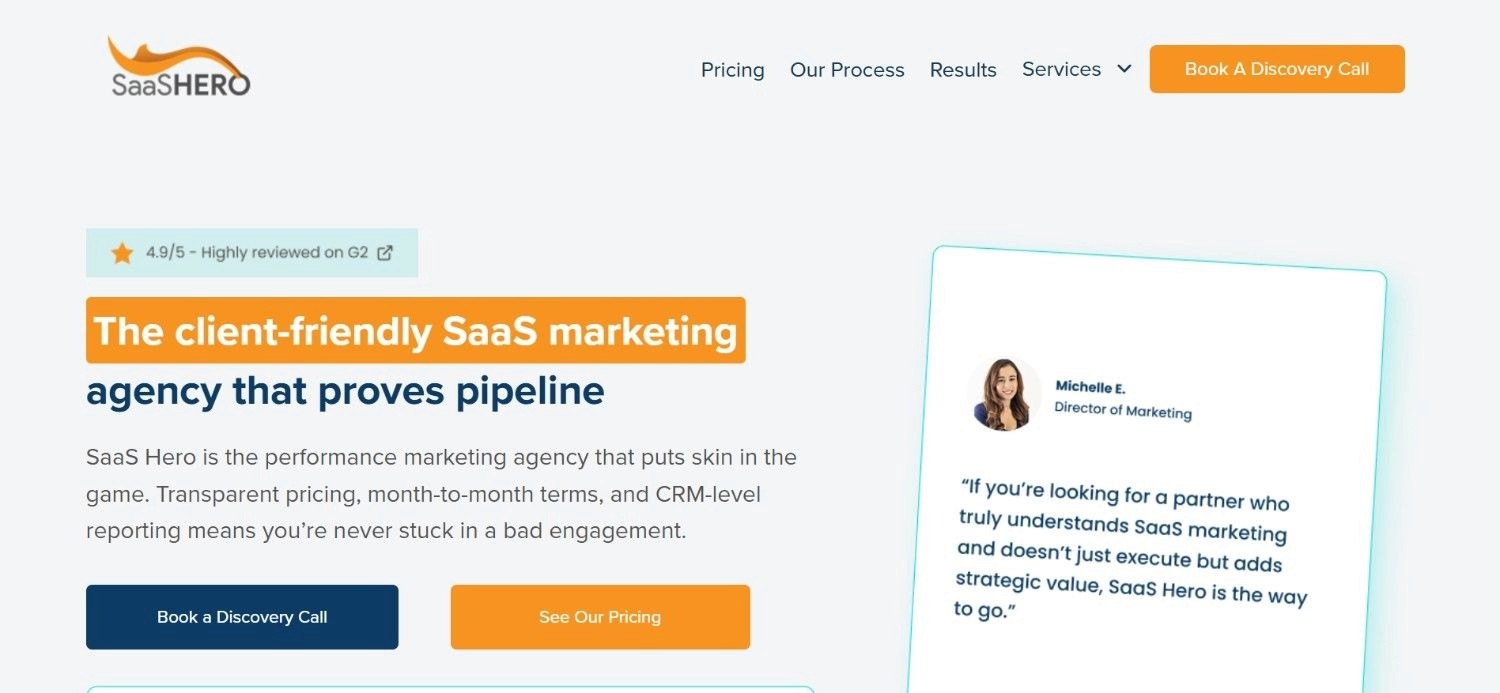
SaaS Hero is a Google Ads agency focused specifically on B2B SaaS companies. Their vertical specialisation means the team understands the SaaS buying journey in detail: the difference between a searcher who is in early research mode versus one who is ready to evaluate vendors, how to structure campaigns for trial-led versus demo-led acquisition models, and how to build keyword architecture that captures demand at every stage of the purchase consideration process.
SaaS Hero manages Google Ads programmes for software companies across a range of categories, bringing category-specific knowledge of keyword economics, competitor ad strategies, and the messaging approaches that convert B2B software buyers. For SaaS companies that want a Google Ads partner who already understands their business model rather than one that needs to learn it during the engagement, SaaS Hero's vertical focus is the primary draw.
Core Services
Google Ads strategy and campaign management built specifically for B2B SaaS acquisition models, covering search, display, and retargeting campaigns aligned to trial and demo conversion goals
Keyword architecture and competitive analysis for SaaS categories, identifying the search queries that indicate genuine buying intent versus research intent and structuring campaigns to concentrate spend on the former
SaaS-specific conversion optimisation covering landing page alignment, offer structure, and conversion tracking setup that reflects how B2B software buyers actually move from search to evaluation to decision
Pros
Deep B2B SaaS vertical expertise means the team understands the buying journey and acquisition model without a long onboarding period
Specialist knowledge of SaaS keyword economics and competitor advertising strategies gives campaigns a meaningful head start in category-specific search environments
Campaign architecture built specifically for trial and demo acquisition models rather than adapted from e-commerce or lead gen templates
Strong track record within the SaaS vertical gives prospective clients relevant reference points
Cons
SaaS-only vertical focus means less established track record outside software categories; less suited for non-SaaS B2B companies
Less focused on the broader go-to-market integration layer – connecting Google Ads to outbound, ABM, and CRM attribution – compared to full-stack demand generation agencies
Vertical specialisation may come with less flexibility for companies with unusual business models that do not fit neatly within standard SaaS acquisition patterns
Why It Stands Out
SaaS Hero stands out for its vertical depth. Running effective Google Ads for a B2B SaaS company requires understanding not just paid search mechanics but how software buyers search, evaluate, and decide – and how that differs across trial-led, demo-led, and product-led growth models.
SaaS Hero brings that vertical knowledge into campaign architecture and optimisation in a way that generalist agencies consistently struggle to replicate.
For SaaS companies that want a Google Ads partner who already speaks their language, SaaS Hero is one of the strongest choices among the top Google Ads agencies serving that vertical.
Special Mentions: Tools Worth Knowing
Beyond full-service agencies, two tools deserve attention for B2B companies running Google Ads programmes.
Neither is an agency, but both address specific gaps in the Google Ads pipeline that agencies often leave unresolved:
1. MasterInbox
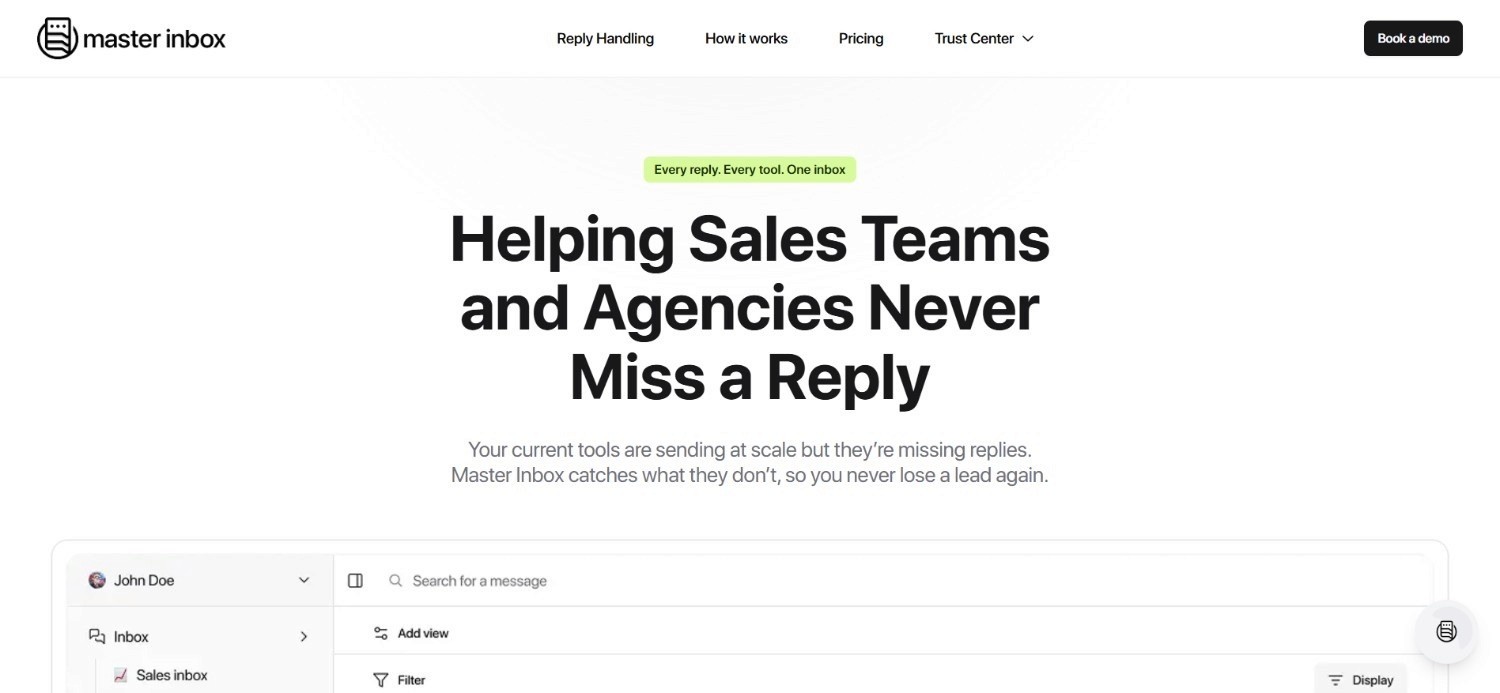
MasterInbox is a multi-inbox reply management tool that consolidates inbound responses from Google Ads, LinkedIn, email, and other channels into a single interface. For B2B companies running paid search, one of the highest-leverage improvements available is simply responding faster to inbound leads.
A prospect who clicks a Google Ad and submits a form is at peak intent at that moment. The longer the response delay, the further that intent decays.
MasterInbox addresses this by ensuring that replies from Google Ads do not get lost in a separate inbox, missed by a sales rep checking the wrong platform, or delayed because the notification routing was never set up properly.
The tool means that whoever comes through a Google Ad gets a response as fast as possible, regardless of which channel they came through.
For B2B companies where Google Ads generates meaningful inbound volume, the conversion rate improvement from faster response alone often exceeds what can be achieved through further campaign optimization.
2. Adyntel
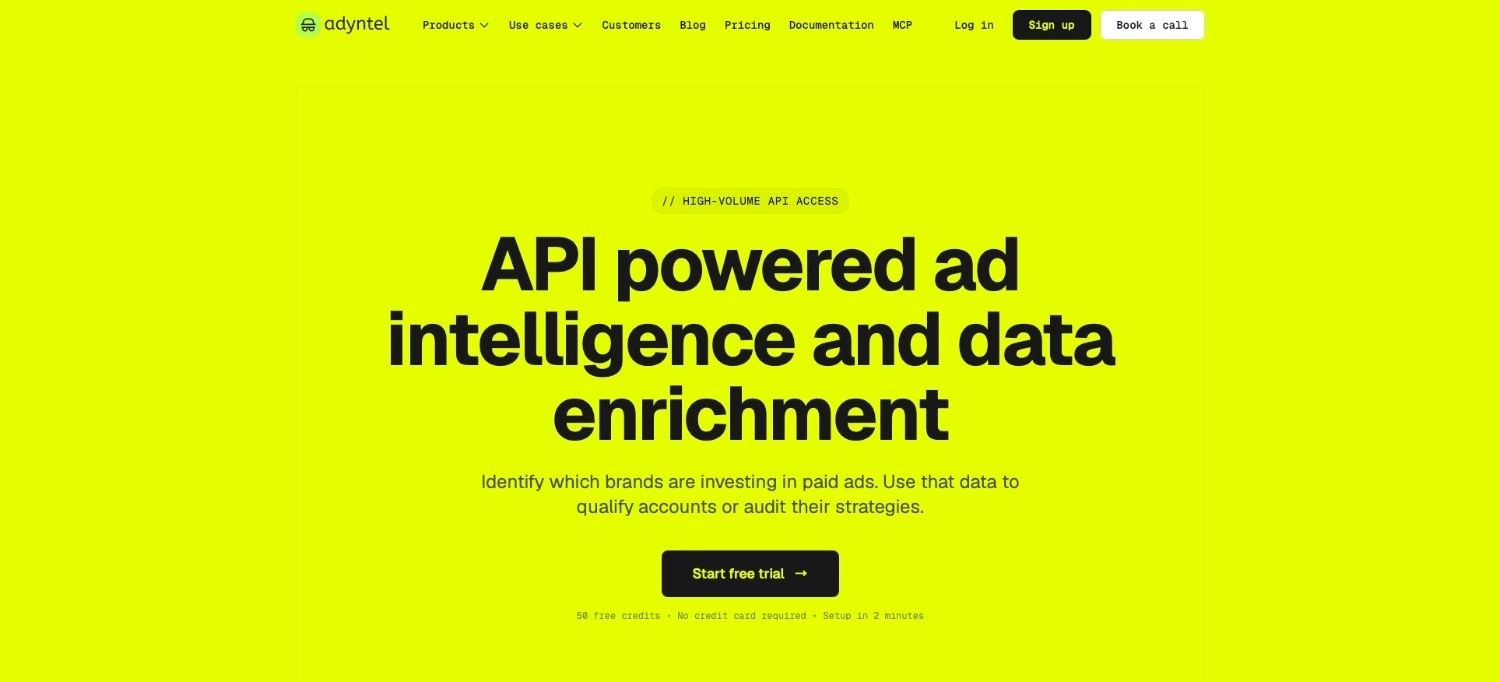
Adyntel is an ad intelligence API that aggregates advertising data across Google, LinkedIn, and Meta into a single call. Rather than checking each platform separately, Adyntel lets teams query a company's ad volume, format activity, and estimated spend across all major channels by domain, LinkedIn URL, or company identifier.
That data can be pushed directly into CRM records, used for sales enrichment, or built into outbound sequences to inform how you engage with companies that are actively advertising.
For B2B companies whose target accounts are themselves active advertisers, understanding their ad volume and channel mix before reaching out gives sales teams a meaningful signal about budget availability, growth stage, and strategic priorities.
Agencies and revenue teams that use Adyntel can build significantly richer account intelligence than those relying on standard firmographic data alone.
For any company interested in understanding how much a prospect is advertising and on which channels, Adyntel consolidates what would otherwise require three separate platform checks into a single API call.
Red Flags to Watch Out For When Hiring a Google Ads Agency
Choosing the wrong partner for Google Ads is expensive and slow to diagnose.
Here are the warning signs worth watching during the evaluation process:
1. They start with keywords, not positioning
An agency that jumps straight to keyword research without asking about your product's unique positioning, your target buyer's psychology, and what differentiates you from competitors in the same search results page is optimising the wrong layer.
Keywords determine who sees your ad; positioning determines whether they click and convert.
If an agency cannot articulate your positioning clearly before launching any campaign, the keywords they choose will be right and the message will be wrong.
2. They optimise for cost-per-click, not pipeline
An agency reporting primarily on cost-per-click, impression share, and quality score is measuring inputs rather than outcomes.
Those metrics matter for campaign health but they do not tell you whether Google Ads is generating qualified pipeline.
Ask directly: how will you connect Google Ads performance to pipeline and revenue? If a clear answer does not come back, the reporting will tell you how efficiently you spent, not whether the spend produced anything commercially useful.
3. They cannot show you how the attribution is built
Most B2B Google Ads programmes have a broken attribution layer: form fills are tracked but not qualified, offline conversions are not imported into Google Ads, and the CRM is not connected to campaign data.
This means optimisation signals are based on incomplete data.
Before engaging any agency, ask specifically how they set up conversion tracking, how offline pipeline is fed back into Google Ads for smart bidding, and how they connect ad spend to closed revenue.
4. They build in their own accounts
Some agencies manage Google Ads from their own Google accounts, using their own billing and tracking infrastructure.
When the engagement ends, the client loses all historical campaign data, quality scores, and audience lists that were built over the duration of the engagement.
The right approach is to build everything inside the client's own Google Ads account from day one, with the client holding admin access throughout.
5. They ignore what happens after the click
A prospect who clicks a Google Ad and lands on a poorly aligned page, waits hours for a response, or gets routed to the wrong sales rep is a lead that the campaign budget paid for and the pipeline process lost.
The best Google Ads agencies treat the post-click experience as part of their remit.
Landing page alignment, response speed, lead routing, and CRM integration are all factors they actively engage with rather than leaving to the client to figure out.
Frequently Asked Questions
What is a Google Ads agency?
A Google Ads agency is a specialist firm that plans, manages, and optimises paid advertising campaigns on Google for B2B companies. Their scope covers keyword strategy, ad copy development, campaign architecture across search, display, and retargeting, bidding and budget management, and performance reporting. The best Google Ads agencies connect campaign activity to pipeline and revenue rather than reporting on traffic metrics alone.
Why is Google Ads particularly valuable for B2B companies?
Google Ads captures demand that already exists: buyers who are actively searching for the problem your product solves, evaluating your category, or researching specific solutions. That active intent makes paid search one of the highest-converting acquisition channels available for B2B companies with clearly defined ICPs. According to Google, businesses earn an average of $2 for every $1 spent on Google Ads, though B2B outcomes vary significantly based on category, deal size, and how well the campaign is structured and attributed.
What should I consider when choosing a Google Ads agency?
The most important factors are: whether the agency starts with positioning and buyer psychology rather than keywords alone; whether they connect campaign performance to pipeline rather than click metrics; whether they build inside your own Google Ads account rather than theirs; how they set up conversion tracking and offline attribution; and whether they take any responsibility for what happens after the click. Most B2B Google Ads failures trace back to one of those gaps rather than poor keyword selection or insufficient budget.
How long before Google Ads produces measurable pipeline results?
With a well-structured campaign and clear positioning, early signals from Google Ads appear within the first 30 days: initial click and conversion data, early quality score feedback, and first inbound leads from paid search. Meaningful pipeline contribution, where Google Ads-generated leads are converting to qualified opportunities at consistent rates, typically takes 60 to 90 days as bidding algorithms optimize and the campaign accumulates conversion data. Campaigns with strong positioning and attribution infrastructure tend to reach pipeline contribution faster than those built primarily around keyword volume.
Should Google Ads run alongside outbound, or can it work alone?
Google Ads works best as part of a coordinated go-to-market motion rather than as a standalone channel. Paid search captures existing demand from buyers who are already searching; outbound and LinkedIn advertising create demand among buyers who are not yet searching but fit the ICP. The two motions reinforce each other: buyers who have seen a LinkedIn ad or received an outbound sequence are more likely to search and convert when they encounter the brand in paid search. The Pipeline Inc.'s approach of connecting inbound from Google Ads back to outbound strategy is a practical example of how that integration produces better results than either channel run in isolation.
What is ad intelligence, and how does it help with Google Ads strategy?
Ad intelligence refers to data about what competitors and target accounts are advertising: their estimated volume, the channels they are active on, the formats they are running, and how that activity changes over time. Tools like Adyntel aggregate this data across Google, LinkedIn, and Meta into a single API call by domain or company identifier. For Google Ads strategy, understanding what competitors are bidding on and how they are positioning their ads before building your own campaigns is a significant advantage. For sales and enrichment teams, knowing how much a target account is spending on advertising is a useful signal about their budget availability and growth trajectory.
What makes a Google Ads campaign specifically effective for B2B SaaS companies?
Effective Google Ads for B2B SaaS requires understanding the SaaS buying journey in detail: the difference between early-research queries and high-intent evaluation queries, how to structure campaigns for trial versus demo acquisition models, and how to build landing pages that convert software buyers who are comparing multiple vendors simultaneously. SaaS Hero's vertical specialisation addresses this directly. Beyond campaign structure, the critical factors are accurate conversion tracking that reflects how SaaS buyers actually move through the funnel, messaging that speaks to the specific pain driving the search, and attribution that connects Google Ads activity back to trial starts, demo bookings, and closed revenue rather than just form fills.